

A normal shoot works around the crew and the light. A talent shoot works around one person’s diary. Here’s what changes when the talent is a household name.
Since 2024, we’ve run three shoots for THE TEAM, the LA-based agency behind AT&T’s US Soccer partnership. A social series with Tyler Adams at Parkstone Golf Club in Dorset. The US kit launch with Christian Pulisic in Milan. And World Cup content with Pulisic and Santi Gimenez at Novara FC’s stadium.
THE TEAM brought the creative and the talent. We ran the production. And every time, the thing that shaped the day wasn’t the kit or the location. It was the talent, and everything that comes with them.
Photography by Kyle Christy.
Their time is the most expensive thing on set
With top athletes, you don’t get a day. You get a window. On the golf shoot, Tyler was due at 2.30pm, give or take half an hour. In Novara, the players arrived between 2pm and 3pm, with everything else in the day built around that.
And it’s not just their time. Everyone on set is there because of them: their agent, the director, a stills photographer, and a client who’s flown in from the US. If the talent is waiting, all of them are waiting.
The real cost isn’t the day rate. It’s the shots you didn’t get. You can’t book another afternoon with a World Cup player because a setup overran. So the whole schedule gets built backwards from the moment they arrive and the moment they have to leave.

Their diary comes first, so you have to flex
Athletes have training, matches, club commitments and other sponsors. Your shoot fits around all of that, not the other way round.
Novara is a good example. It was first pencilled in for early March, then moved to mid-March to fit both players’ schedules. We held two days at the stadium in case the manager added a last-minute double training session, and sure enough, one landed on the first day. Then a possible club shoot put the second day in doubt, so we moved again. The 19th was finally locked nine days out, once both players confirmed.
Every time it moved, we went back to the stadium and the crew, rebooked, and agreed upfront what moving or cancelling would cost. That meant THE TEAM could make quick calls with their client, knowing the production would hold together whatever the players’ diaries did.
The talent’s window also decides what you can shoot. With the players not free until mid-afternoon and the light gone by early evening, we made sure the stadium had indoor spaces for interviews, voiceover and seamless shots after dark.
And when it all came together, the talent’s teams noticed:
“We heard positive feedback from both AT&T as well as talent teams, and you were a part of that success.”
Zach Sansavera, Director of Account Strategy, THE TEAM
The creative moves too. In the days before Milan, the plan shifted from audio-only lines to on-camera reads. With talent, that’s normal. The job is to absorb those changes without any of the stress landing on the talent or the agency.
They should never wait for you
On a normal shoot, a ten-minute lighting change is no big deal. On a talent shoot, it’s ten minutes you’ll never get back.
In Novara, we built and lit every set the evening before. On the day, the players only had to walk between sets with their director, while photographer Kyle Christy moved between his own. We planned five to ten minutes per setup, and the talent never stood around while kit moved.
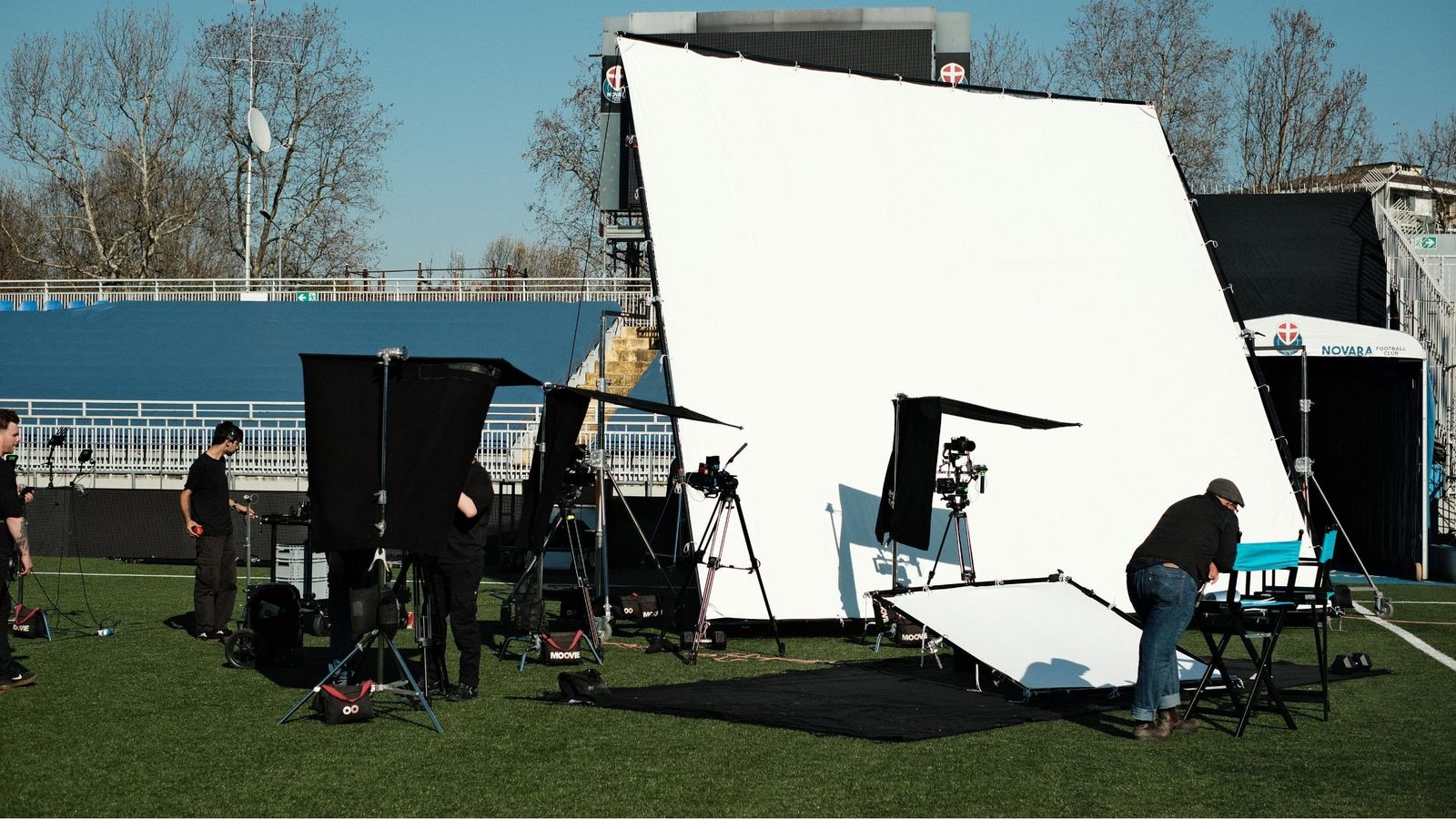
Talent also can’t do things twice, so video and stills happen in the same window. We ran two video units alongside Kyle’s stills team, side by side, so neither had to wait for the other. Scripted lines went on a teleprompter, so the players could focus on delivery rather than memorising.

What high-profile talent expects
Talent at this level has done hundreds of shoots. They can tell within a minute whether a set is organised. In our experience, they expect:
- A clear plan from the moment they arrive. Who they’re working with, what’s first and when they’re done.
- One voice. Direction comes from the director, not five people at once.
- Wardrobe that’s ready. Kit steamed, the right sizes and clips on hand. In Novara, each player had their match kit plus a lifestyle look, with two wardrobe and two make-up artists on set.
- The small things sorted before they ask. We checked favourite snacks and drinks, allergies and whether security was needed before each shoot.
- To be looked after. In Novara we had a medic on site the whole time the players were on set.
- A calm set. If the crew is stressed, the talent picks up on it, and the performance suffers.
Get those right and the talent relaxes. That’s when you get the best performances.
There’s an audience on set
A talent shoot is watched by more than the camera. The agent is protecting the player’s time and image. The client wants to see every take and sign off before the talent leaves, because there won’t be a second chance.
That’s why we always set up a proper video village, with monitors and headsets so the client and agents can follow every take. In Novara, we also ran transfers for the client team from Milan, so all they had to think about was the shoot.
After the Milan shoot, Zach told us:
“I felt like everything flowed super well, and the client & agent were super happy & impressed with what they were seeing on set.”
Zach Sansavera, THE TEAM
The brand details get more scrutiny too. Before Milan, the new kit was under wraps, so we couldn’t light it properly until we’d seen it in person. In Novara, even the corner flag had to be in AT&T blue, with its logos covered. When a famous face is on screen, everything around them gets noticed.

Why agencies bring in a production partner
On all three shoots, THE TEAM owned the idea, the talent relationship and the client. Our job was to make sure every minute of the talent’s window counted, so they could focus on the client and the player.
It’s been that way since the very first shoot. After the golf day in Dorset, Don Cunanan at THE TEAM wrote:
“Your team was great to work with and client was really pleased with what we initially captured.”
Don Cunanan, THE TEAM
Each shoot led to the next one. The Novara content ran throughout the 2026 World Cup, including in the Dallas stadium. You can see more in our AT&T case study.
Before you book high-profile talent
- Get the talent’s window in writing, then plan the day backwards from it
- Expect their schedule to move, and agree date change costs upfront
- Ask the talent’s team about food, allergies, security and wardrobe sizes early
- Make sure every set is ready before they walk in
- Plan video and stills into the same window
- Give the client and agents a way to follow every take
Shooting with talent: FAQs
How much time do you get with high-profile talent on a shoot?
Usually a few hours in the afternoon, not a full day. Agree the window in writing with the talent’s team, then build the whole schedule around it.
What do athletes expect on a shoot?
A clear plan, one person directing, wardrobe ready to go, and no waiting around. The best sets feel calm and organised from the moment the talent arrives.
How do you plan a shoot around an athlete’s schedule?
Work around training and match days, and expect changes. If the date might move, hold a backup with the location and agree what moving or cancelling would cost, so the agency can decide quickly.
Final thoughts
Shooting with high-profile talent is a privilege, and it comes with real pressure. Their time is short, their schedules move and everyone on set is watching. The shoots that go well are the ones built entirely around them.
Got big-name talent booked in? Get in touch and we’ll make sure every minute counts.